


Why do we love our favorite songs?
A Song For You looks to answer that age-old question through conversations with musicians about one song that influenced their artistry.
Each post dives into one song that left an indelible mark on their life and craft through three parts:
In Their Own Words: The artist reflects on their chosen song, sharing the personal story behind why it matters to them.
The Journey Behind the Music: I take the wheel back to explore the song’s history, cultural impact, and the story of how it came to be.
A Song For You: A carefully chosen recording or performance of the song, selected by the artist.
In the very first installment of A Song For You, we’re joined by John Spulak, a Washington, DC-based guitarist and songwriter, for a conversation about A Love Supreme by John Coltrane.
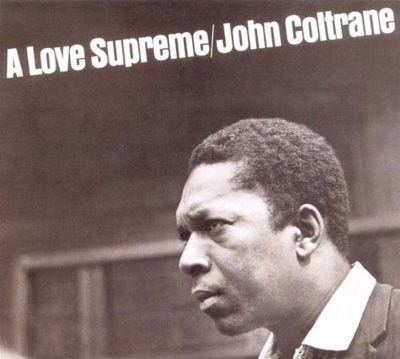
In Their Own Words: John Spulak on “A Love Supreme”
I first heard A Love Supreme during my senior year of college after chasing down an influence I kept encountering. I’d heard members of the Grateful Dead speak about it with reverence, and remember seeing a video in which Carlos Santana said he burns incense and plays it in every hotel room he stays in. Doing so, he said, gives him “no doubt that that room is clean from negative, harmful spirits.”
So I listened. I appreciated it. But then I moved on.
It wasn’t until this past summer, about ten years later, that something pulled me back. I don’t remember what exactly. Just that when I pressed play again, everything was different. This time, the infatuation was instant.
What Coltrane conveys with his horn on this album is nothing short of magic. I have never heard a purer expression of emotion. Art steps in where words can’t, and Coltrane walks further and with greater purpose than anyone.
A Love Supreme isn’t really an album in the traditional sense. It’s a single suite, a 33-minute spiritual testimony recorded in one session in December 1964. Coltrane’s saxophone doesn’t just play notes; it searches, yearns, and ascends. His quartet — McCoy Tyner on piano, Elvin Jones on drums, Jimmy Garrison on bass — doesn’t accompany him so much as lift him higher.
Tyner’s sublime counterpoint somehow grounds Coltrane’s sax lines as they trend toward the cosmos. He turns dissonance into sweetness. Jones steers the ship with the most evocative drumming I know of, and Garrison dances around it all on the double bass.
For more than six months now, I’ve listened to A Love Supreme at least once a day. Not as background music. Not passively. I sit with it. I know it like the back of my hand. Every phrase, every shift, every moment where the quartet locks in. But the familiarity hasn’t dulled the experience. If anything, it deepened it.
The daily repetition has become something else entirely: a constant in a life full of variables. While we all have our routines, they can be subject to factors beyond our control. The gym can be too crowded. A friend can be too busy to talk. But A Love Supreme is always there, unchanged, offering the same 33 minutes every time. And because the music never shifts, I can notice what does — my own internal landscape, the way I feel on any given day, the thoughts that surface when nothing else is demanding attention.
By engaging with the same thing daily, you create time to understand the internal circumstances you face. Eventually, you become so familiar with it that there’s nothing more to notice about the music itself. What else is there to do than investigate your own mind?
It’s not dissimilar to meditation. A Love Supreme has become my practice, my point of reference, my way of checking in with myself. And in that repetition, I’ve found something rare: a constant I can actually control.
The Journey Behind the Music
Sammy here. The story behind how this record came to be is just incredible. Let’s dive in.
A Love Supreme didn’t emerge from a place of comfort or ease. It was born from crisis, surrender, and rebirth.
In the spring of 1957, John Coltrane was fired from one of the best jobs in jazz. He’d been playing saxophone and touring with Miles Davis’s legendary quintet, but his heroin and alcohol addiction had made him unreliable. Alternately brilliant and catatonic, Coltrane’s behavior became increasingly erratic. After a live show that April, Davis let him go.
Coltrane returned to his mother’s home in Philadelphia and made a decision: he would quit cold turkey. No medication. No medical intervention. Just willpower, isolation, and family support. For more than a week, he locked himself away, his body and mind in revolt.
But something happened in that room. Somewhere in the depths of withdrawal, Coltrane experienced what he would later describe as a spiritual awakening. He emerged changed: not just free from addiction, but transformed in demeanor and purpose.
In the liner notes to A Love Supreme, Coltrane described what happened.
“In the year of 1957, I experienced, by the grace of God, a spiritual awakening, which was to lead me to a richer, fuller, more productive life,” Coltrane said. “At that time, in gratitude, I humbly asked to be given the means and privilege to make others happy through music.”
That pledge became his musical mission.
The album is structured as a spiritual journey in four movements: “Acknowledgement,” “Resolution,” “Pursuance,” and “Psalm.” Each section mirrors Coltrane’s own progression: first acknowledging the divine, then resolving to pursue it, searching with urgency, and finally celebrating what he’d found.
But it’s the fourth movement, “Psalm,” that reveals just how deeply personal this work was. Coltrane wrote a poem — a prayer of humility and gratitude — and included it in the liner notes. What most listeners didn’t realize at first was that he wasn’t just including the poem as supplementary text. He was performing it.
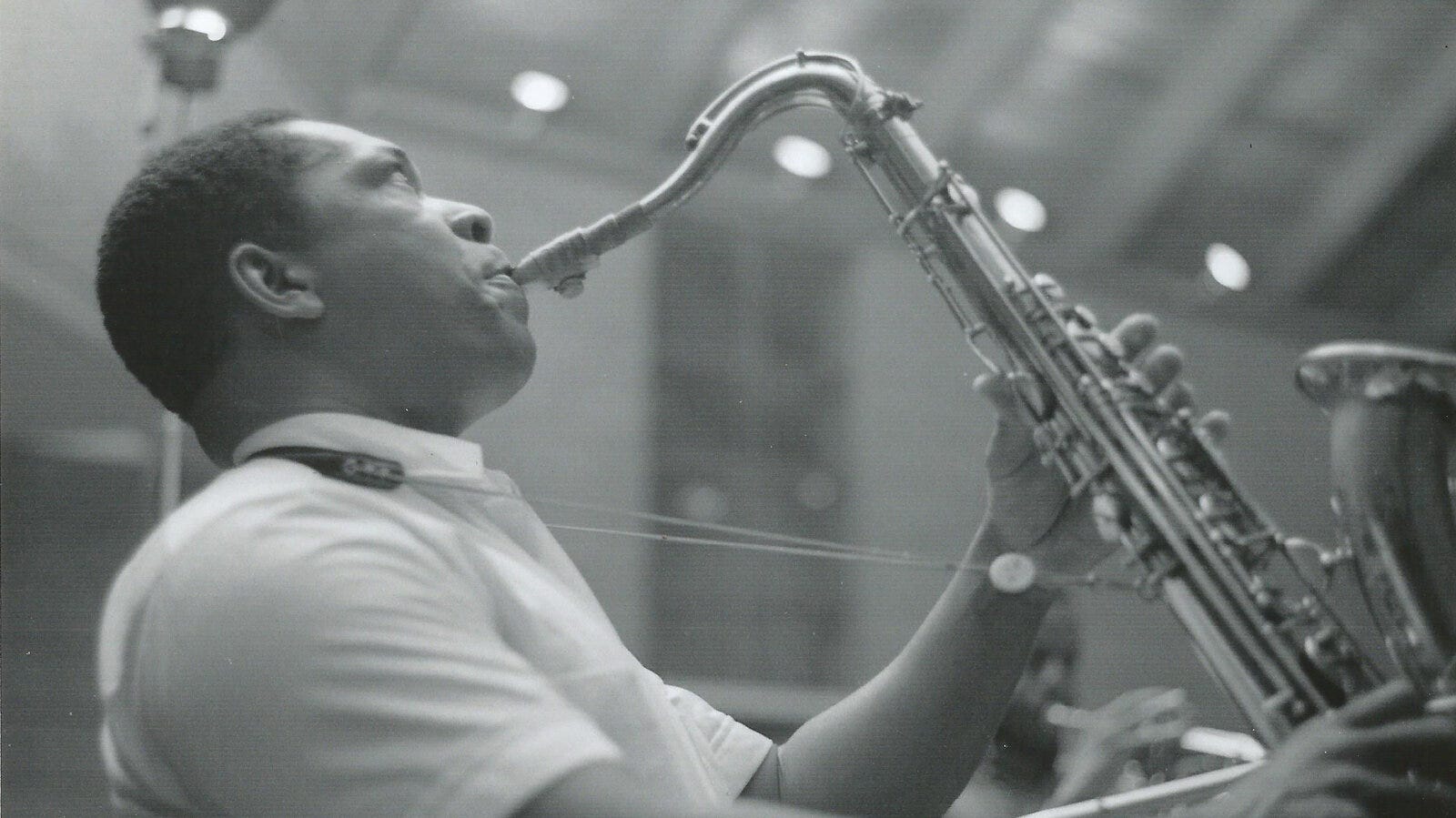
In his handwritten notes for the recording session, Coltrane described “Psalm” as a “musical recitation of prayer by horn.” He placed the poem on a music stand in front of him and played each syllable as a note on his tenor saxophone. One syllable, one note. You can follow along with the written poem while Coltrane plays, and they match perfectly.
When the words read “Thank you God,” his saxophone shouts with gratitude. When he writes “beautiful,” the notes turn serene. The poem ends: “Elation. Elegance. Exaltation. All from God. Thank you God. Amen”.
Coltrane plays “Amen” in three notes, the only embellishment in the entire recitation.
For Coltrane, there was no difference between speaking the prayer and playing it. As he wrote in the liner notes: “Words, sounds, speech, men, memory, thoughts, fears and emotions — time — all related… all made from one.”
While A Love Supreme would go on to become one of the best-selling jazz albums of all time, Coltrane died just three years after recording the album from liver disease, likely related to his earlier addiction, at just 40 years old.
More than half a century later, Coltrane’s magnum opus reminds us that sometimes music is the only language that can express everything we have to say.
A Song For You
this is simply outstanding writing on a truly transcendent artist and album. A Love Supreme is my go-to meditation album. And if I really want a long meditation, I add the Allman Brothers’ Hot Lanta and In Memory of Elizabeth Reed to the front end.
Very inspiring post. Album is already teed up for a focused listen. Thank you.