



Welcome back to the second installment of A Song For You.
It’s hard to express how grateful I am for all the kind conversations I’ve had with folks on Substack since my first post. This overwhelmingly positive community of musicians, music writers, and devoted listeners is hiding in plain sight, and I’m so happy to be a part of it.
In a world that seems to be getting stranger by the day, who would’ve thought that a social media platform could be such a needed place of respite.
For those new here, this series examines why we love our favorite songs through conversations with artists and music lovers about one song that holds a special meaning to them.
Each post dives into one song that left an indelible mark on their life through three parts:
In Their Own Words: Our guest reflects on their chosen song, sharing the personal story behind why it matters to them.
The Journey Behind the Music: I take the wheel back to explore the song’s history, cultural impact, and the story of how it came to be.
A Song For You: A carefully chosen recording or performance of the song, selected by the guest.
Today we’re joined by Passing Time author Michael Bateman for a conversation about “All My Friends” by LCD Soundsystem.
In Their Own Words: Michael Bateman on “All My Friends” by LCD Soundsystem
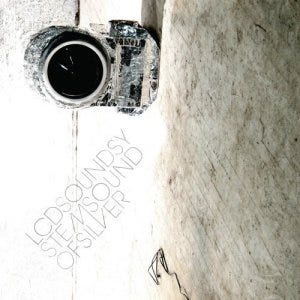
Spotify’s algorithm tried to push LCD Soundsystem onto me for years. I just did not get it. I’d hear a song like “All My Friends” and be instantly turned off by its repetitive hammering of a single piano note. It’s off-putting. You feel uneasy. And frontman James Murphy isn’t exactly a great singer in a traditional sense. A lot of his songs are kind of spoken-wordy or rougher around the edges.
It wasn’t until a cross-country move from Virginia to Colorado — a place where I had exactly one friend — that I came to realize the emotional tug behind the simplicity of these droning songs and raw lyrics.
I moved to Boulder in 2020, essentially starting from scratch. Fortunately, I was able to assemble a group of friends pretty quickly through a lot of the outdoor hobbies I’m engaged in. When the vaccines came out and the world started opening back up a little bit, we formed a really strong group of friends and had the most wonderful summer of 2021 — going on climbing trips every weekend, camping, and spending time around the Front Range and Boulder.
I can actually give you the exact date: September 19, 2021. That’s when I added “All My Friends” to my playlist. Something finally clicked.
Murphy speaks to the bad prioritization many of us experience in our 20s with the lyric, “You spend the first five years trying to get with the plan, the next five years trying to be with your friends again.” It’s easy to mislabel your priorities and end up spending your time in ways you regret. This song has a bit of a yearning feeling to it — a desire to reclaim lost time.
I rode on the rails of traditional achievement for my entire life. You do what you’re supposed to in high school, then you get into a good college, and then you get good grades and do interesting things in college. There’s a well-trodden path, in direction if not in specifics.
But after college, there are no more rails or linear paths. There are no more standard routes to achievement. There are an infinite number of paths you can take, which is scary to face down.
Danish philosopher Søren Kierkegaard wrote “anxiety is the dizziness of freedom.” As your friends scatter along these infinite paths, it makes staying in touch challenging.
When you’re younger, you have a lot of circumstantial friendships. The classic example is a classmate: you know them because you’re around them every day. But once that forcing function of being in school with them for seven hours a day is gone, you lose them.
Your early 20s bridge the transition into adulthood by being an inherently more social time. Maybe you’re living in a group house where no one has any overly demanding things to do. Maybe you’re working an entry-level gig, or you don’t have a significant other. It’s a phase of life with less obligation and more freedom.
But as you get older, circumstantial friendships fade away and you’re left with the friendships that you deem worthy of investment — of time, resources, effort.
At the very end of “All My Friends,” Murphy repeatedly sings “where are your friends tonight?” He’s speaking to the narrowing of the circle, something that’s natural, and not necessarily bad. But there’s still a tinge of sadness, yearning, and nostalgia. It used to be the case that you could just show up at any given house or party or bar and see some circumstantial friends there. But as you get older, that experience becomes few and far between.
I saw LCD Soundsystem play at Red Rocks a few years ago. They closed the show with “All My Friends”.
After six minutes of the melancholic vocals, Murphy defiantly repeated the lyric “If I could see all my friends tonight.”
And there we were, me and my friends, arm in arm, screaming every word right along with him.
The Journey Behind the Music: Sammy’s Thought Bubble
Sammy here. This song hit me hard. Let’s dive in.
You’re not supposed to go from a Brooklyn bedroom project to selling out Madison Square Garden in nine years. You’re especially not supposed to do it making seven-minute songs with repetitive piano riffs about getting old.
But by 2007, when Murphy released “All My Friends” as the second single from Sound of Silver, a night on broadway became a real possibility.
Murphy was already 37 years old (ancient by indie rock standards) and writing songs about aging in contrast to the cannon of rock and roll songs about glory days (well they’ll pass you by).
While Michael’s interpretation of the song hinges on the literal connection with real world friends, I was inspired while researching this piece around how Murphy borrowed elements from “friends” he may have never met despite their influence on him.
The repetitive piano riff that opens “All My Friends” was inspired by minimalist composer Steve Reich’s “Music for 18 Musicians”.
The emotional build harkens back to Joy Division’s “Transmission”, which similarly starts off gently before becoming overwhelming.
The desperate refrain at the end, “if I could see all my friends tonight,” subtly nods to Arthur Russell’s Dinosaur L funk-trance masterpiece “Go Bang”, referencing the lyric: “I just wanna see all my friends at once, I’d do anything to get the chance to go back. I wanna go back.”
He was making a song about nostalgia out of his nostalgia for other songs. Vintage Murphy. When Mojo magazine asked him in 2008 why the song resonated so deeply with fans, he quipped:
“I don’t know,” Murphy said. “It’s sad-ish and people are old.”
Tongue-and-cheek jokes aside, it wasn’t just that people were old. It’s that Murphy had articulated something specific about how we observe our own aging. He named the feeling of the disappearance of linear guardrails that guide us through the first two decades of life. He’d written it from the perspective of someone looking back at those crazy younger years, filled with excitement and bad decisions, wondering where the time — and people — went.
While I was too busy listening to my NOW That’s What I Call Music! Vol. 24 CD during the song’s heyday to have been aware, it was no doubt a defining song of this century’s first decade. Pitchfork named it the #1 song of 2007, then later ranked it #2 on their Top 500 Tracks of the 2000s. Guardian readers voted it the best single of the year. Time magazine put it at #4 on their best songs list. Rolling Stone eventually placed it at #87 on their 500 Greatest Songs of All Time. Even David Bowie was a fan and reportedly encouraged the band to reform shortly before his death.
For me, this seems to be one of those songs that somehow finds a way of hitting you at exactly the right moment. I’ve been a casual LCD Soundsystem fan since I heard them perform on SNL in February 2022. I was instantly enthralled by their energy and demeanor, but had never really sat with this particular song.
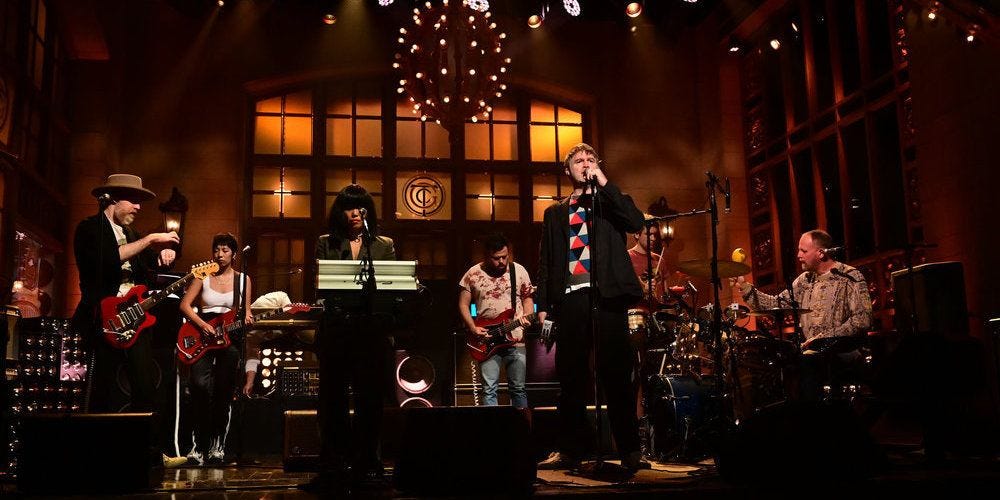
I chatted with Michael about this song exactly one month before the day the decade of my 20s will come to a close. I’ve had this song on repeat over the past week, and texted Michael how much the song means to me now. He replied:
“I’m going to guess that you’re gonna get turned on to some pretty sweet music on this journey,” he replied.
That’s the whole point of this Substack, isn’t it? Not just cataloging songs people love, but understanding how music finds us when we’re ready for it. How you can be aware of a song for years, but then one day you hear it again and suddenly it means everything.
Maybe that’s what Murphy understood all along. That “All My Friends” wasn’t written about one moment, but for the moment. The moment when you realize you’re older than you thought you were. When you look around and wonder where everyone went. The song keeps finding people at that exact threshold, holding up a mirror, and reminding us that we’re not crazy. The train is always on time.
A Song For You: All My Friends (Live at Madison Square Garden, April 2, 2011)
Nearly 20,000 people packed into the world’s most famous arena to watch a Brooklyn dance-punk band play what they’d billed as their final show ever.
There wasn’t any drama within the band or falling out among bandmates. Murphy just felt it was the right time. This performance from Madison Square Garden is the definitive version of “All My Friends”. You can feel a packed arena living the exact paradox the song describes: celebrating something while letting it go.
(Of course, LCD Soundsystem reformed in 2016. Nothing actually ends the way we plan it to.)
Enjoy!
Suggested Reading: An Article For You
One of my greatest inspirations to begin writing on Substack was this article Michael published last year that pulls inspiration from another LCD Soundsystem song. Give it a read: Losing My Edge by Michael Bateman. Subscribe to Michael’s Substack Passing Time here.
Pleasure talking with you as always Sammy! Thank you!