


Welcome back to A Song For You — a series of conversations with artists, writers, and music lovers about one song that holds a special meaning to them.
Each post dives into one song that has changed how our guest sees the world through three parts:
The Journey Behind the Music: I set the scene to explore the song’s history, cultural impact, and the story of how it came to be.
In Their Own Words: Our guest reflects on their chosen song, sharing the personal story behind why it matters to them.
A Song For You: A carefully chosen recording or performance of the song, selected by the guest.
Our guest today is Ted Olson, a professor of Appalachian Studies and Bluegrass, Old-Time, and Roots Music Studies at East Tennessee State University. He’s the leading authority on the musical and cultural history of the region, and the song he chose is “How Can a Poor Man Stand Such Times and Live” by Blind Alfred Reed.
Recorded in 1929, Reed’s timeless song addresses the social issues of its time. In doing so, it set the wheels in motion for generations of musicians to impact the world through their songs.
The Journey Behind the Music: Sammy’s Thought Bubble
Many of us feel like we live in a world that’s uniquely fractured and complex. But is it? Has the world really changed, or is it just the same as it ever was?
The world moves faster than we can process it. We’re split between two versions of the truth so dramatically that common ground feels impossible. The gap between those who have and those who don’t keeps widening. We refresh our phones obsessively, doom-scroll through news cycles that feel apocalyptic, and convince ourselves that no generation before ours has ever felt this level of anxiety.
There’s comfort in that narrative. It lets us romanticize the past. We imagine simpler times, easier times. We picture a world where people weren’t glued to screens, where the news cycle didn’t move at all hours of the day, where communities felt more cohesive and life felt more stable. It’s a seductive fantasy, and we cling to it because the present feels so overwhelming.
But here’s what that fantasy misses: every generation has stood exactly where we’re standing and navigated the same complexities of the human experience — survival, fairness, power. But they had to do it without being afforded the luxuries that we’re so accustomed to today.
While the concerns over the emerging technologies of today are real, it wasn’t long ago that the advantages were something out of a sci-fi movie. We can video call someone on the other side of the world for free. Modern medicine has extended and improved lives in ways that would’ve seemed miraculous to prior generations. And we have access to the entirety of human knowledge in your pocket.
And yet, the song for you today — recorded nearly a hundred years ago — reminds us of just how little the human experience has really changed, and how each generation’s songs offer a snapshot in time to remind us of that.
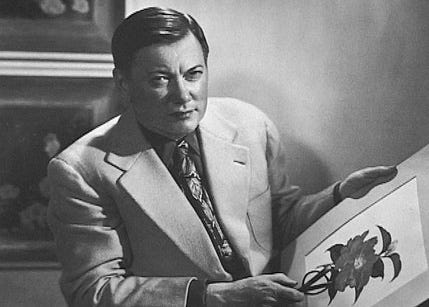
Our guest today is Ted Olson, a professor of Appalachian Studies and Bluegrass, Old-Time and Roots Music Studies at East Tennessee State University. He’s the leading authority on the musical and cultural history of the region, and the song he chose is “How Can a Poor Man Stand Such Times and Live” by Blind Alfred Reed.
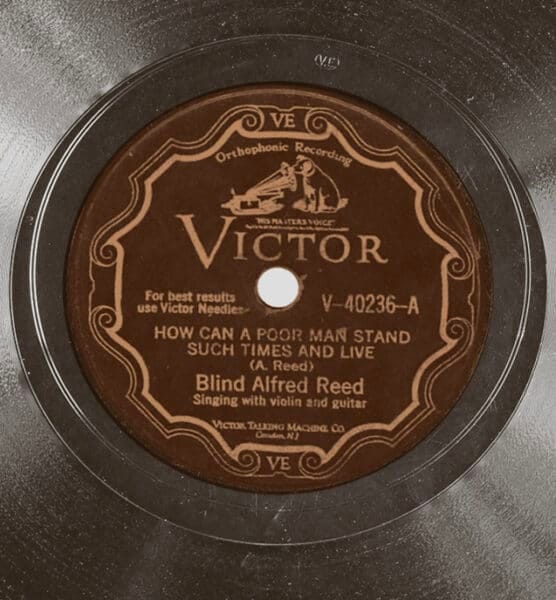
Recorded in New York City on December 4th, 1929 — just weeks after the stock market crash — Reed sang about the crushing weight of poverty, inflation, and a system that seemed designed to keep poor people poor. Sound familiar?
In Their Own Words: Ted Olson on “How Can a Poor Man Stand Such Times and Live” by Blind Alfred Reed
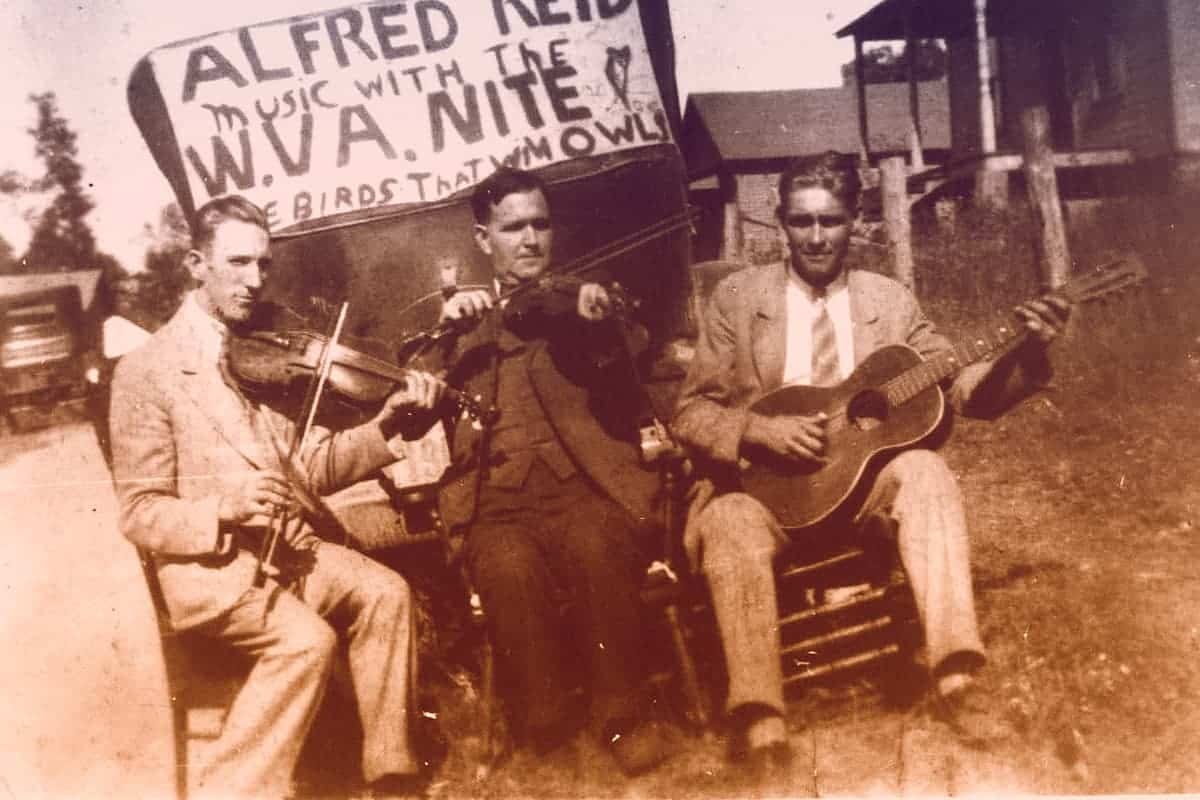
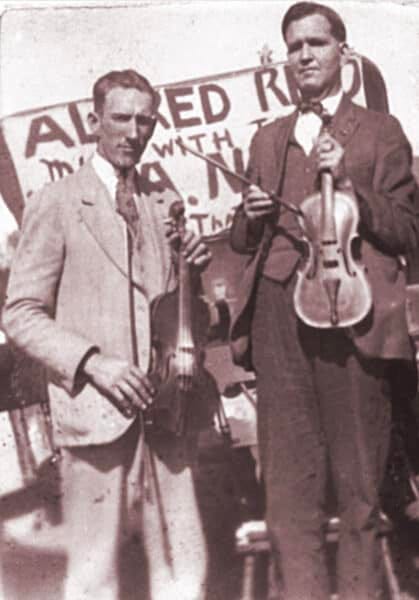
Reed was born blind in Floyd County, Virginia, the son of a farm laborer who taught himself to play fiddle by ear. In 1927, while performing at a fiddle convention, he caught the ear of record executive Ralph Peer. He invited Reed to Bristol, where he recorded four sides for Victor Records.
Peer’s field recording sessions in Bristol, Tennessee that summer contributed to the birth of the commercial country music industry and the royalty structure as we know it today. He famously captured the first recordings of two of the genre’s pioneers in the Carter Family and Jimmie Rodgers.
Shortly after the stock market crashed in 1929, Reed traveled from Appalachia to New York City — into the belly of the beast — to record “How Can a Poor Man Stand Such Times and Live?”
He was singing about inflation, corruption, and a system that seemed designed to keep poor people poor. A hundred years later, those words still resonate because he tapped into something timeless — the feeling that the deck is stacked against you, and the only honest response is to speak your truth about it. This session would go on to be the final recordings he would ever cut.
That’s what made the song matter then, and that’s what makes it matter now. This song has endured because it speaks to a universal truth that transcends any single moment in time.
Musicians across generations have recognized this — Ry Cooder recorded a beautiful version on his first solo album in 1970. Bruce Springsteen covered it too, rewriting the lyrics to reflect the inequality and government neglect he witnessed after Hurricane Katrina in New Orleans.
Both understood how Reed felt: that this song transcends its moment because the struggle it describes is timeless.
A Song For You: How Can a Poor Man Stand Such Times and Live by Blind Alfred Reed
This recording is from the Dust-to-Digital album Olson produced and curated: Blind Alfred Reed, Appalachian Visionary.