



Welcome back to A Song For You — a weekly series of conversations with artists and music lovers about one song that holds a special meaning to them, published every Sunday.
Each post dives into one song that left an indelible mark on their life through three parts:
The Journey Behind the Music: I set the scene to explore the song’s history, cultural impact, and the story of how it came to be.
In Their Own Words: Our guest reflects on their chosen song, sharing the personal story behind why it matters to them.
A Song For You: A carefully chosen recording or performance of the song, selected by the artist.
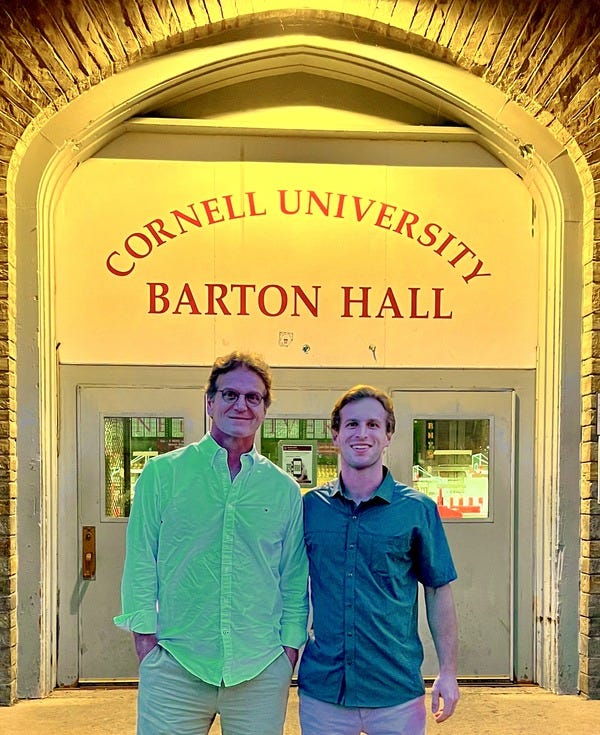
Today we’re joined by a very special guest. Without his passion for music and storytelling, there would almost surely be no A Song For You. Please welcome author, rock & roll savant, and my dad, Doug Criscitello, for a conversation on “Slow Ride” by Foghat.
The Journey Behind the Music: Sammy’s Thought Bubble
There’s a certain kind of magic that happens when you hear a good old fashioned pedal-to-the-metal rock song in the right moment. The music of my dad — who belongs to that odd sliver of a generation wedged between flower-power Boomers and grunge-soaked Gen-Xers — has always reminded me of that truth.
Born in the ’60s, he was too young for Woodstock and too old for Lollapalooza. Fortunately for him, I’ve indoctrinated him into the world of jambands which has offered some salvation. His cohort grew up in history’s waiting room, suspended between eras, and nowhere is that limbo captured more perfectly than in the final frames of Richard Linklater’s movie Dazed and Confused.
Mitch Kramer, finally home at sunrise after a long night out, drops onto his bed and puts on his headphones. The camera cuts to Randall “Pink” Floyd and the boys rolling down the highway in my dad’s dream car, a 1970 Chevelle SS 454, heading out to buy tickets for an upcoming Aerosmith show. The opening riff of Foghat’s “Slow Ride” kicks in—a sonic seal on the film’s themes of transition, freedom, and a future that feels wide open and totally uncertain.
For me, that song makes me want to dust off my old Guitar Hero III: Legends of Rock, where “Slow Ride” is the very first song you play. For my dad’s mini-generation though, it was so much more. It was an anthem for an in-between generation trying to figure out the right speed to traverse the open road ahead.

In Their Own Words: Doug Criscitello on “Slow Ride” by Foghat
If you walked into my house on any given Tuesday, you probably wouldn’t hear Foghat. You’d be more likely to catch something like the dusty, carnival-barker growl of Tom Waits, the cosmic Americana of Wilco, or maybe an inspiration-moving-me-brightly rendition of “Terrapin Station” by the Grateful Dead.
On the surface, “Slow Ride” feels like the polar opposite of a Waits ballad or a Dead jam. One is a straightforward stomp; the others are intricate layers of grit, poetry, and improvisational exploration. Maybe it’s just the natural course of things, but the tunes that us self-anointed cool dudes blasted back in the day don’t make the playlist very often anymore. Is it that I listened to bad music back then and have since matured into having finer musical taste? Or is it that the songs were meant for a particular moment in time, now long since past?
Not too long ago, I read Jeff Tweedy’s World Within a Song, where he lays out his “no bad songs” philosophy. It got me thinking about the music of my adolescent years, which must have been at least as worthy of affection as ABBA’s “Dancing Queen,” the track that forced him to check any elitism he may have harbored about pop music. That sent me down my own musical memory lane, asking a simple question: What do I do with the songs of my high school years?
Back then, my crew and I were certain we were listening to the best songs ever made. That conviction was forged over long nights at “The Rez” — a deep-woods, keg-friendly spot in Upstate New York that served as our northern mirror of the Moon Tower in Linklater’s Texas. Like the characters in the movie, we were navigating the absurdities of authority; I even remember having to sign that same heavy-handed no-drugs pledge just to play on a sports team. It seems trivial now (and it was) but it perfectly captured our vibe as rebels without a cause… or a clue.
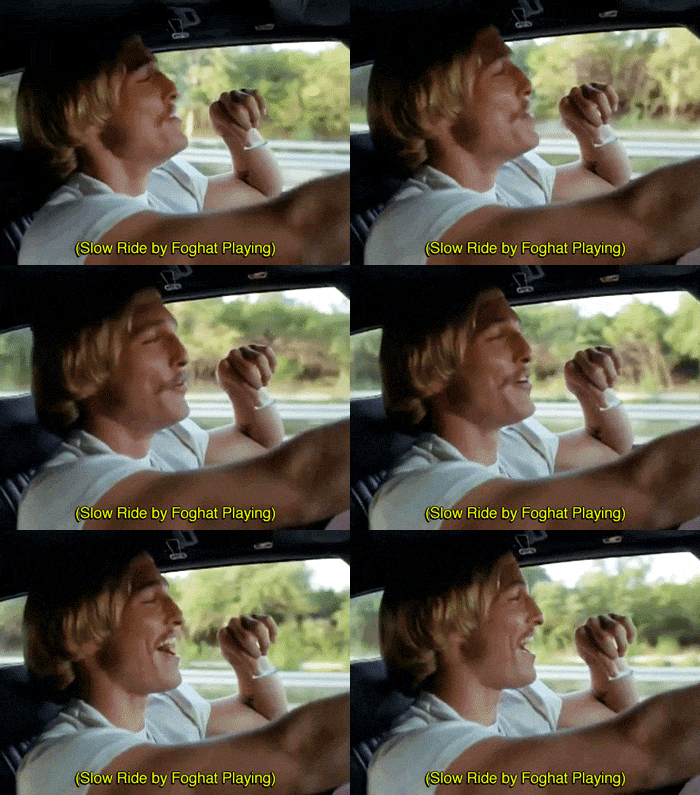
So, there we were: lukewarm beer in styrofoam cups, a bonfire with a way-too-close gas can, someone’s car doors and trunk flung open, speakers on the verge of blowing. In that setting, nobody wanted to parse the technical brilliance of a solo or the genius of a key change. We needed a hard-charging beat that matched the feeling of being young and invincible — only later to discover we were really just dazed and confused.
“Slow Ride” took us exactly where we wanted to go.
From Cornell ’77 to Foghat Live
But as a vehicle, is “Slow Ride” just a rust bucket from a bygone era? Does it have any right to even idle in the same parking lot as the music I listen to today? Is Foghat really much better than hog fat?
Hanging at The Rez was a far cry from being at the Dead’s legendary Cornell ’77 (amazingly just up the road), but they shared a singular goal: the eternal present. Whether it’s a twenty-minute psychedelic adventure or a relentless three-chord boogie, both are designed to keep you locked in the moment, ignoring the clock and any looming curfew.
We were living Wooderson’s “L‑I‑V‑I‑N” philosophy years before Dazed was even conceived. “Slow Ride” was our shorthand for pushing back against the powers that be and the ever‑growing list of rules we were supposed to follow. Maybe not exactly high art, but songs like that belonged to our mini-generation and we loved them.
No Apologies for Being Happy
If we had only listened to technically dazzling compositions or lyrics worthy of a Pulitzer, we would’ve missed the heart-pounding, visceral liberation of a power chord. Tweedy reminds us that calling something a guilty pleasure is just a fancy way of apologizing for being happy.
Today, I might lean toward the complex textures critics breathlessly ascribe to Wilco’s Yankee Hotel Foxtrot or the noir-tinged imagery of Tom Waits’ Small Change. But I also respect “Slow Ride” for what it is: an ode to an era long since passed, yet still somehow resonant. It reminds us that life is often best lived as one long, slow ride — takin’ it easy, trusting the rhythm is right, and, every once in a while, rockin’ all through the night.
“Slow Ride” made us feel like that ride would last forever.
It still does.
A Song For You: Slow Ride (Live 1978)
Are You Ready To Take a Slow Ride?
Slow Ride = Guitar Hero. I'm glad you have that association too.