


What’s your favorite song with a name in the title?
I asked the people of Substack to share theirs, and more than 150 songs were submitted.
Unsurprisingly, you all have tremendous music taste. I compiled every one of them into a playlist and haven’t been able to stop listening all week. Listen to the full playlist here.
As I got deeper into the mix, something started to reveal itself. These aren’t just songs with names in the title. Many of them carry a kind of weight that has nothing to do with the person named. These songs often showcase longing, grief, a love letter, or a eulogy dressed up as a pop song. The name is just the door. The story is what you step into.
I kept coming back to two submissions that have been top of mind for me in recent months. Both are songs about life on the water, but they couldn’t be more different in what they do with a name.
To understand the impact of each song, I leaned heavily on John U. Bacon’s captivating 2025 book The Gales of November — a masterful piece of narrative journalism that traces the lives of Great Lakes sailors, the music they loved, and the song that made sure the world would never forget them.
Part One: Brandy (You’re a Fine Girl) by Looking Glass
In the early 1970s, the sailors who worked the Great Lakes lived a particular kind of life. Long stretches of monotony broken by moments of alarm — the heat, the cold, the waves churning their stomachs. The second their ship tied to the dock, they’d race down the ladder to the nearest payphone, almost always within a hundred feet of the pier, to call home. Most docks had only one phone, and entire crews wanted to use it. They’d stand ten deep in the cold and the rain for their chance to drop a few dimes and tell their families they’d arrived safely.
When the time on shore came, they didn’t wander far. The shores of the five Great Lakes are home to 167 towns, but sailors go to only a few ports. Their favorite bars were never part of a chain, never well-known outside their circle. They all had one thing in common: they were the closest bars to the dock.

Inside those bars, the jukeboxes told the story of two generations. The older sailors played the day’s country hits of Loretta Lynn, Tom T. Hall, George Jones, and Johnny Cash. The younger guys went for rock and rollers like the Rolling Stones, Van Morrison, or Creedence Clearwater Revival. But across every generation, across every bar from the Municipal Liquor and Lounge in Silver Bay, Minnesota, down to the Flat Iron Bar in Cleveland, Ohio, there was one song they all agreed on — one song that got played a half dozen times before the night was done.
And it was written by a kid from Rutgers who had never sailed a day in his life.
In 1970, Elliot Lurie started a band called Looking Glass, playing local bars and fraternity parties in New Jersey. One day, tinkering with some chord progressions, he stumbled onto something. Within a week or two the song was finished. When he played it for the band, they all liked it — but none of them thought they had a hit.
The story Lurie told was simple: a waitress in a seaside bar, serving whiskey to sailors who love her, but whose hearts belong to the sea. She’s good and she’s kind and she’d make a fine wife — but the sea will always win.
The sailors say, “Brandy, you’re a fine girl / What a good wife you would be / But my life, my love, and my lady is the sea”
Lurie’s knowledge of the girl, the bar, and the sailor’s soul seemed so intimate and so real that actual sailors assumed for decades he must have been one of them. He was not. The biggest boat he’d ever been on was the Staten Island Ferry.
“I just made it up,” Lurie said. “I know that’s disappointing.”
But it wasn’t disappointing to the men on the Great Lakes. It was gospel.
John Hayes, a sailor who spent his career on those waters, said it plainly.
“Those guys might not have been sailors, but man, that song is spot-on,” Hayes said. “‘My life, my love, and my lady is the sea.’ I worked with guys like that, who dreaded the end of the shipping season.”
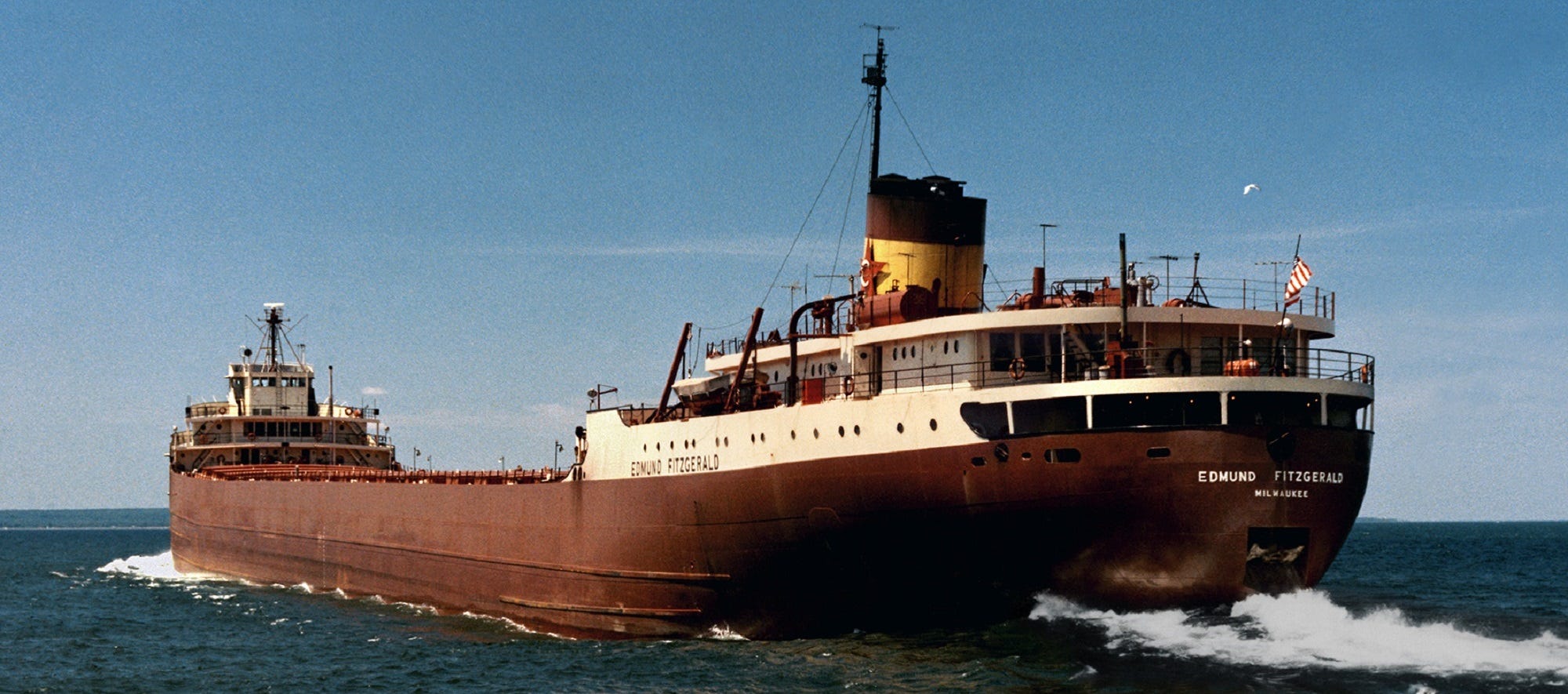
One of those guys was Tom Bentsen — an oiler aboard the legendary Edmund Fitzgerald. According to Hayes, “Brandy” was practically Bentsen’s theme song. A loner at sea who loved a song about a loner at sea. A man who had chosen the water over everything else life had to offer.
On November 10, 1975, the Edmund Fitzgerald went down in Lake Superior with all 29 men aboard. Tom Bentsen was among them.
And that is where the second song begins.
Part Two: The Wreck of the Edmund Fitzgerald by Gordon Lightfoot
This past November marked the 50th anniversary of the sinking of the Edmund Fitzgerald — a Great Lakes freighter named after Edmund Fitzgerald, a Milwaukee insurance executive and president of Northwestern Mutual who was reluctant to have the ship bear his name, almost as if he sensed what fate might await it — the deadliest Great Lakes disaster in decades, and the subject of one of the most unlikely hit songs ever recorded.
Gordon Lightfoot first read about the wreck in a half-page Associated Press story in the Los Angeles Times, two weeks after it happened. Then he read Jim Gaines’s piece in Newsweek, which went deeper. Lightfoot was instantly captivated. The opening line of the Newsweek story — “When the Edmund Fitzgerald went down I imagined what that wave might have been like” — moved him deeply.
He went and bought all the old newspapers. He laid everything out in chronological order. He was so drawn to the sea shanty melody forming in his head, and so consumed by the somberness of his subject, that he felt the 29 men deserved more than a half page in a national news magazine. He was deeply unsure of himself — afraid of being inaccurate, afraid of exploiting a tragedy, and afraid of getting it wrong. But the story was too compelling to ignore.
In the spring of 1976, Lightfoot summoned his band to Eastern Sound Studios on Yorkville Avenue in Toronto for a five-day session. He began by writing about everything in chronological order — the big lake they call Gitche Gumee, the load of iron ore, the maritime sailors’ cathedral where the church bell chimed, the gales of November, the Edmund Fitzgerald, and the tolling bell — ringing 29 times to commemorate the life of each man lost.
When it was done, Warner Bros. thought it had no chance. But something happened when people heard it. Without a chorus, bridge, or hook, Lightfoot shares the dark and lengthy story over seven eight-line stanzas for nearly seven minutes. And yet it climbed to number two on the Billboard 100 chart and stayed there.
He played it at the Mariners’ Church in Detroit, accompanying a barebones band as a memorial. When he met the families of the 29 men, backstage at concerts over the decades, he asked each one the same question: did they think he truly cared about the song, or had he exploited their grief?
The answer, for most of the families, came slowly and painfully — but it came.
Marilynn Church Peterson lost her husband in the sinking. The first time she heard the song, she hated it. Decades later, on May 5, 2002, she went to see Lightfoot perform. When he played it live, her view changed completely.
“When I heard him play it live I knew he truly cared about my feelings,” Peterson said. “And backstage he asked what I thought of it. I assured him it was a great tribute. He truly cared about all the families involved.”
The families of the 29 men have now passed the song down through generations. Great-grandchildren gather at family functions and play it together. The younger ones who never knew their fathers, their grandfathers, their great-grandfathers — they grew up on Lake Superior, the lake she grew up on, and most ultimately came to find in the song not an exploitation of loss, but a way through it.
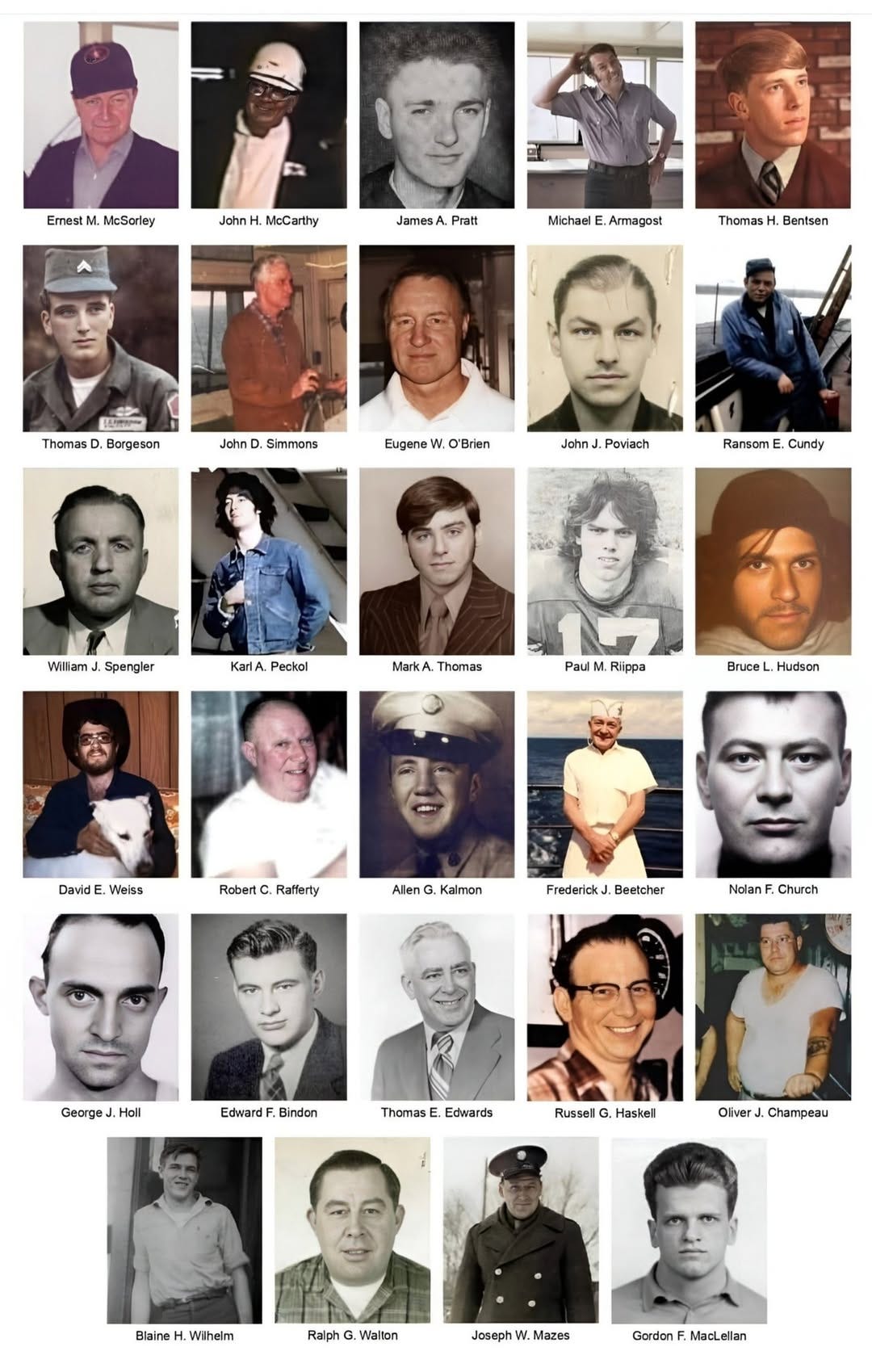
For the fortieth anniversary of the sinking in 2015, bassist Rick Haynes and Lightfoot flew from a concert in Utica, New York to the Upper Peninsula, then drove to Whitefish Point — the last landmark the Edmund Fitzgerald would have seen — to be with the families. It was their only day off from the tour.
Lightfoot himself put it simply. When asked to describe the song in one word, he said: “Pure.”
All of the songs submitted to the playlist — each one with a name in the title — do the same thing: they turn a name into a portal. A name becomes an invitation. It’s a doorway into someone else’s most intimate moment. These songs let us step into lives we’ve never lived but somehow recognize as our own.
Awesome telling of tales, much appreciated Sammy !! Great Job
Super cool to hear the backstory on both of these. Thank you Sammy!